








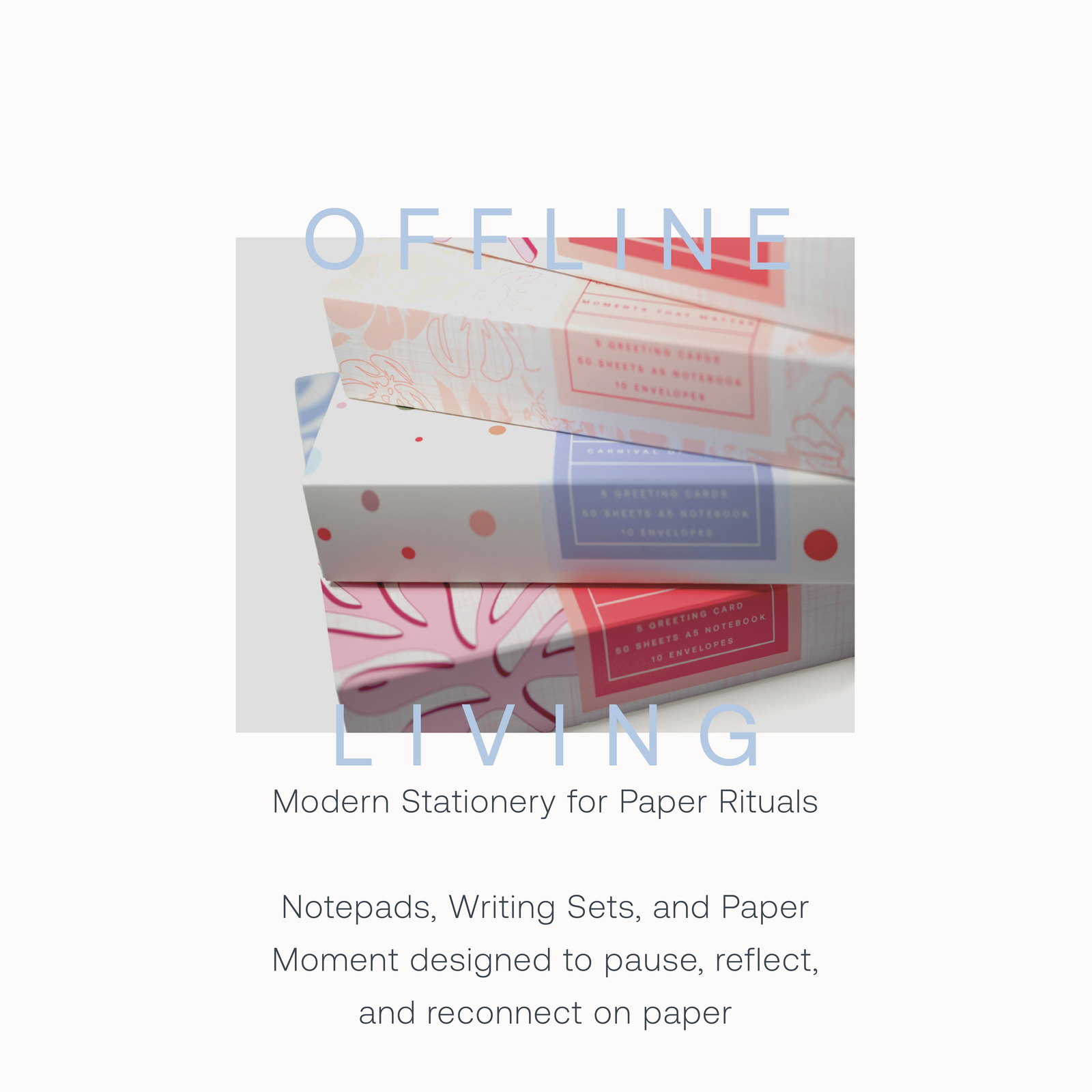




Most people are not looking for less life. They are looking for a little more quiet inside it.
Most people are not actually looking for a digital detox. They are looking for something much smaller than that — a few quiet moments during the day when nothing is asking for their attention.
Often before we are fully awake, our calendars begin to fill. Messages arrive. Plans shift. To-do lists grow before the kettle has even finished boiling.
Reaching for a phone becomes automatic — not because we are careless, but because it is always within reach.
Yet many people feel a quiet pull in the opposite direction. Toward something slower. Something physical. Something that creates a pause without requiring a new routine, a program, or another app to manage.
Often, the simplest place to begin is with paper.
In recent years this quiet shift has started to take shape under a broader idea sometimes described as analog wellness. The concept is simple: when parts of daily life move back into the physical world writing by hand, noticing seasonal changes, slowing down long enough to reflect, attention begins to settle again.
Small practices like Paper Pauses and seasonal reflection belong to this same movement. They create moments where the mind can step out of the constant flow of digital information and reconnect with something slower.
What Is Unplugged Living?
Unplugged living is the practice of creating small, intentional moments without screens by using offline activities like writing by hand, reading, or simply sitting without digital input.
It does not mean stepping away from technology completely.
Phones, messages, and digital tools are part of modern life. They help us work, communicate, and stay connected with the people around us.
Unplugged living simply introduces small spaces where screens are no longer the centre of attention.
A notebook opened at the kitchen table. A handwritten message instead of a quick reply. A few quiet minutes where thoughts move onto paper instead of disappearing into a message thread.
These moments are small, but they gently change the pace of the day.
Unplugged living is not about escaping modern life.
It is about creating a few small places within it where your attention can settle again.
What Is the Difference Between Unplugged Living and Digital Detox?
Digital detox suggests stepping away from technology entirely for a period of time.
For many people, that sounds appealing, but it rarely fits into everyday life. Work, communication, and daily logistics all rely on digital tools.
Unplugged living works in a quieter way.
Instead of removing technology, it introduces small offline moments alongside it. The phone is still there. Messages still arrive. But not every pause in the day has to be filled by a screen.
Sometimes the moment can be filled with something simple, like writing a few lines on paper.
What Are Paper Pauses?
Paper Pauses are small, offline moments created through simple paper prompts.
A Paper Pause might be a short question on a card, a seasonal prompt, or a few lines written down before the day moves on.
There is no routine to follow and nothing to complete.
The purpose is not productivity or insight. It is simply to slow down long enough to notice what is already present.
Because they are small, Paper Pauses fit easily into everyday life — while coffee brews, during a short break, or before going to sleep.
Why Does Paper Naturally Slow the Mind?
Screens encourage constant movement.
Notifications appear. Information refreshes. One piece of content leads to another. Attention rarely stays in one place for long.
Paper works differently.
Writing by hand slows the pace of thought. The mind follows the movement of the pen. There are no alerts interrupting the moment and no new information pulling attention away.
The page simply holds what is written.
That quiet space is often enough to create a shift — from constant input to a calmer state of attention.
How Unplugged Living Can Support Focus, Calm, and Connection
How Does Unplugged Living Improve Focus?
When attention is not interrupted every few seconds, the mind begins to settle.
Thoughts become easier to follow. Concentration improves. Even a short period spent reading or writing on paper can help restore focus that is often fragmented by digital environments.
The effect is subtle but noticeable.
Can Unplugged Living Reduce Anxiety?
Digital environments rarely pause.
There is always another message, another update, or another piece of information asking for attention.
Offline moments change that rhythm. Without constant input, the mind has space to slow down. Even brief moments of writing by hand or sitting without a screen can reduce the feeling of mental overload.
How Does Unplugged Living Help You Reconnect With Yourself?
Digital communication moves quickly. Messages are short and responses are immediate.
Writing by hand moves more slowly.
That slower pace allows thoughts to surface that might otherwise pass unnoticed. A reflection written on paper often reveals something that would not appear in a fast conversation.
Does Unplugged Time Improve Personal Connection?
A handwritten note carries a different weight than a quick text.
Even a short message written on paper feels more considered.
Sometimes a small gesture — a card, a note, or a few handwritten lines — can feel more meaningful than multiple digital messages.
What Are Simple Ways to Start Living Unplugged?
Unplugged living does not start with a big decision.
It starts small:
- Write a note instead of sending a quick message
- Open a book instead of scrolling
- Write down one thought during the day
- Take a short walk without headphones
- Spend a few minutes with a notebook
These are simple actions, but they change how a day feels.
Do I Need to Quit Social Media to Live Unplugged?
No.
Unplugged living is not about quitting anything.
It is about adding small offline moments into your existing life. You can still use your phone and stay connected digitally.
You simply create moments where you choose something else.
How Much Time Does Unplugged Living Take?
Sometimes as little as two minutes.
A Paper Pause might happen while coffee brews or before going to sleep.
Even a short moment can make a difference.
How Do Paper Pauses Connect to A Calmer Year?
For many people, Paper Pauses are a starting point.
Over time, people begin to notice patterns — how their attention shifts with the seasons, how certain moments invite reflection more naturally than others.
From this idea, A Calmer Year emerged.
What Is A Calmer Year?
A Calmer Year is a seasonal write-along that follows the rhythm of the year.
Each month introduces:
• one seasonal theme
• one small detail to notice
• one simple writing prompt
There is nothing to complete and no strict routine.
It is simply a gentle way to return to paper throughout the year.
How Do I Begin?
Living more unplugged does not start with a big change.
Start with one small moment today.
Take a piece of paper. Write down one thought. Pause for a minute without a screen.
That’s enough to begin.
What is unplugged living?
Unplugged living is the practice of creating small, intentional moments without screens by using offline activities like writing by hand, reading, or sitting without digital input.
What are Paper Pauses?
Paper Pauses are short, offline writing moments using simple prompts that help you slow down and reflect during the day.
What is analog wellness?
Analog wellness refers to offline practices like writing by hand and journaling that support focus, calm, and emotional awareness in a digital world.
How does writing by hand improve focus?
Writing by hand slows thinking and reduces distractions, which helps the mind settle and improves concentration.
Do I need to stop using my phone to live unplugged?
No. Unplugged living is about adding small offline moments, not removing digital tools completely.


