



Small Offline Moments That Help You Feel Present Without Starting a new routine
|
|
Time to read 7 min



|
|
Time to read 7 min
You don’t need a new practice. You don’t need to commit to anything. You just need one small, offline moment when you feel disconnected from yourself.
Our article is for people who feel mentally full, overstimulated, or disconnected in busy, screen-heavy lives, and are looking for a simple way to reconnect without adding another routine or responsibility.
This is about reconnecting.
Most of your day happens on screens. Work emails. Messages. Scrolling. Even when you are trying to relax, you are still consuming information and processing input.
Offline Moments work because they pull you out of the digital loop. They ask your hands to do something. They ask your body to feel something. They give your mind a surface to rest on that is not another screen.
You are not escaping your life. You are simply shifting your attention to something physical, tangible, and present.
When you feel disconnected, it is often because you are living entirely in your thoughts. Planning. Worrying. Replaying conversations. Solving problems that have not happened yet.
Your senses bring you back. The cool weight of a pen in your hand. The scratch of ink on paper. The texture of a page under your fingertips. The quiet sound of your own breath.
These are not distractions. They are anchors. They remind you that you have a body, not just a mind. That you exist in a physical world, not only a mental one.
Small offline moments work because they engage your senses. They help you notice what is real and present, rather than what is imagined or remembered.
There is something grounding about noticing the season you are in.
In January, winter asks you to slow down. The light is softer. The air is colder. The world outside feels quieter and more still.
When you connect with the season through your senses, you remember that you are part of something larger than your to-do list. You are part of a rhythm that does not care about productivity or progress. It simply moves, slowly, through cycles of rest and growth.
Seasonal rituals help you feel present because they tie you to time and place. Not the time on your calendar, but the time you can feel in the air. The cold on your skin. The early darkness. The way winter light falls differently than summer light.
This is presence without effort. You are not trying to be mindful. You are noticing what is already here.
A small ritual is not a 30-minute meditation. It is not a morning routine. It is not a weekly practice or something you track.
A small ritual is something you can do right now, with what you have, exactly as you are.
It does not require you to be calm first. It does not require the right mood or the right moment. It simply requires you to begin.
Small means:
30 seconds to 5 minutes
No preparation needed
Can be done once and never again
Works imperfectly
Paper is not a journaling practice. It is not a creativity tool or a productivity system.
Paper is a surface. A container. A place to put something down.
The physical act of moving a thought from your head onto paper signals to your brain that it no longer has to actively hold it. The thought has been captured. Your mind can let go.
You are not writing to remember. You are writing to release. The paper holds it so you do not have to.
There is also something sensory about paper that screens cannot replicate. The weight of it. The slight resistance as your pen moves across the page. The way ink settles into fiber.
Paper meets you in the physical world. And that is where presence lives.
These are not habits. They are simple offline moments to reconnect. Use them when you need them.
Write one thought that has been circling in your mind. Do not explain it or solve it. Just name it.
Examples:
“I am worried about the meeting tomorrow.”
“I feel overwhelmed.”
“I do not know what I need.”
This works because your brain registers that the thought has been acknowledged and no longer needs repeating.
Write down three things you can physically sense right now. Something you can feel, hear, or see. This shifts attention from thinking to presence without forcing calm.
Write one sentence about what you notice about the season you are in. Not what you think about it. What you sense. This reconnects you to time and place beyond your schedule.
Write one sentence giving yourself permission to feel what you are feeling or need what you need. Making permission visible often makes it real.
Start a sentence and finish it without thinking.
Prompts like:
“Right now, I feel…”
“What I actually need is…”
“This season feels…”
Often, you learn something you did not know you knew.
Habits come with expectations. You are supposed to repeat them, track them, and stay consistent.
One-time actions do not carry that pressure. You do them once. They help or they do not. You move on.
When pressure is removed, people often return to what helped naturally, not out of obligation but because it worked.
Your handwriting can be messy. Your sentence can be incomplete. You can cross things out or stop after one word.
This is not about creating something meaningful or beautiful. It is about giving your mind somewhere to rest.
The only rule is to put something on paper.
Winter already asks you to slow down. To notice quiet. To turn inward before the next cycle of growth.
Small offline rituals fit naturally here. They work with the season instead of against it.
You do not need to force calm. You can meet it where it already exists.
You do not need the right notebook or the right pen. A receipt or a sticky note is enough.
Choose one ritual. Try it once. Notice what shifts.
If you would like something simple to keep on hand, we created a free collection of small offline rituals designed for moments like this.
No commitment. No tracking. Just one small moment when you need it.
An offline or analog moment is a short, intentional pause away from screens where attention returns to something physical, sensory, and present. It can be as simple as writing one thought on paper or noticing your surroundings without digital input.
You create an offline moment by choosing something small and physical that fits into your day as it already is. An analog moment does not require preparation, time blocks, or routines. It works best when it happens naturally, in response to feeling mentally full or disconnected.
No. Offline moments are not meant to be habits or practices you maintain. They are one-time actions you can return to when needed. Removing the expectation of repetition helps them stay supportive rather than demanding.
What works better is focusing on Analog moments engage the senses and the body, not just the mind. Writing on paper, holding a pen, or noticing physical surroundings helps shift attention out of constant mental processing, which reduces overload without requiring effort or focus.
An offline or analog moment does not ask you to concentrate, clear your mind, or do anything “correctly.” It simply invites you to notice what is already present through physical interaction. Presence arises naturally, without performance or technique.
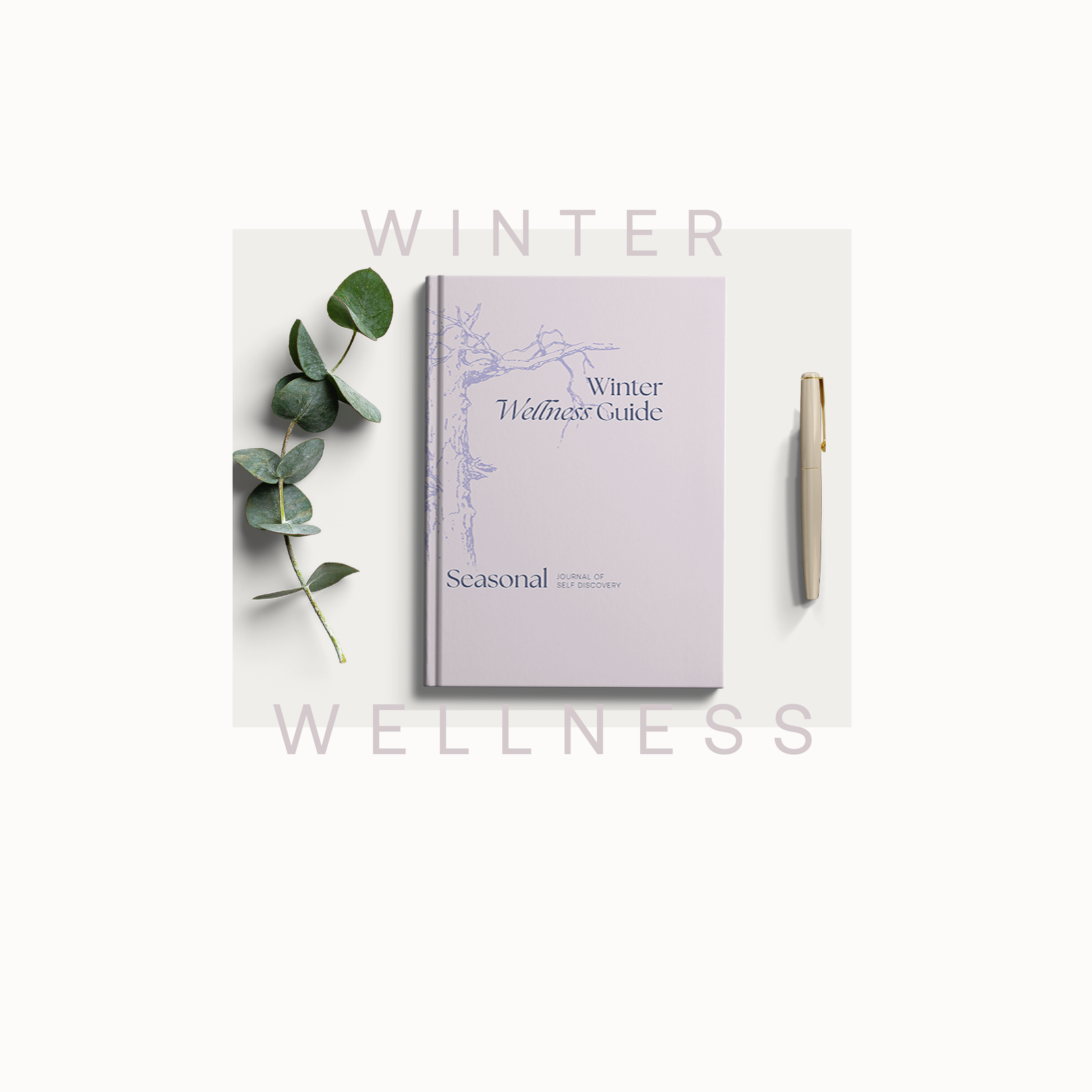
Whether you're looking to prevent burnout, build emotional resilience, or simply create more space for rest in your busy life, the Winter Wellness Guide offers a practical, beautiful way to support your calmer living journey.
Begin this season by planning in a way that truly supports your body, mind, and heart.
