



Why Choosing an Analog Lifestyle in 2026 Might Be the Kindest Form of Self-Care
|
|
Time to read 10 min



|
|
Time to read 10 min
A modern way of loving your one beautiful life
How an analog bag and stationery create meaning in the in-between moments
Most of life does not happen in the big milestones. It unfolds in the in-between moments. Waiting for the train. Sitting in a café before a meeting. The quiet minutes before the house wakes up. The pause between one task and the next. These are the moments we often give away without noticing. A hand reaches for the phone almost automatically. A few messages, some quick headlines, and more minutes gone, without even noticing.
Not because we are careless. Mostly because the phone is always there. It fills space easily. It keeps the mind occupied when there is nothing else to do.
But many people are beginning to notice something else too. That these small gaps in the day hold a different kind of value. They are often the only places where the nervous system can soften, where the mind can land, where a sense of presence quietly returns.
By analog lifestyle, we mean choosing small, physical, sensory habits over habitual scrolling in the everyday gaps of life. Not as a rejection of technology, but as a gentler way to care for attention, nervous system, and presence. The idea of an analog bag as a way into an analog lifestyle comes from this noticing.
For us, the analog bag is not a product or a trend. It is a doorway. A simple way to bring analog living into real life, one small moment at a time.
An analog bag is simply a small collection of offline tools you carry with you. A notebook. A pen. A card. Something you can reach for when a pause appears. Instead of scrolling, your hands touch paper. Instead of consuming for a quick dopamine hit, you make a small mark, a note, a gesture.
It is not about being productive or creative in a big way. It is about staying with the moment that is already there.
Moments that belong to you.
Scrolling thrives in moments of transition. When one thing ends ,and the next has not yet begun, the brain looks for stimulation or relief. Over time, this creates a simple reflex. Pause means phone.
When you place a physical alternative into those same moments, something begins to shift. Your hands move more slowly. Your breathing settles. Attention becomes narrower and calmer.
Opening a notebook. Writing a sentence. Turning a page. These actions give the nervous system a sense of beginning and ending. Instead of endless input, there is completion. A small moment that feels contained.
This is how habits change in a gentle way. Not through discipline or rules, but through repetition of small calming experiences inside ordinary life.
For many people, this feels less like breaking a habit and more like rediscovering a different rhythm.
Paper has a quiet way of slowing time down. A thought becomes a sentence. A sentence becomes a trace. A trace becomes a memory.
Writing is different from scrolling because you participate in it. You shape something instead of absorbing it. Even a few words can make a moment feel held rather than lost.
Over time, these small gestures begin to accumulate. A card sent. A page filled. A note kept. They create a sense of continuity, a thread running through the days.
Not everything meaningful arrives in big moments. Much of what shapes a life happens in small, ordinary pauses.
Analog living is often pictured as a solitary activity. Journaling alone at a table. Drawing quietly by a window. These moments matter. But connection belongs in this picture too.
Carrying a few simple writing tools with you creates the possibility of small, spontaneous connection. A short message written while waiting for a train. A card posted without a special occasion. A few handwritten words that travel slowly and land somewhere warm.
These gestures keep relationships alive in gentle ways. They bring care into everyday time rather than reserving it for special dates.
They turn ordinary movement into meaningful exchange.
At Glimmery Moments®, our work begins with a simple belief. A calmer life does not arrive through big changes or perfect routines. It grows through small moments that belong to you.
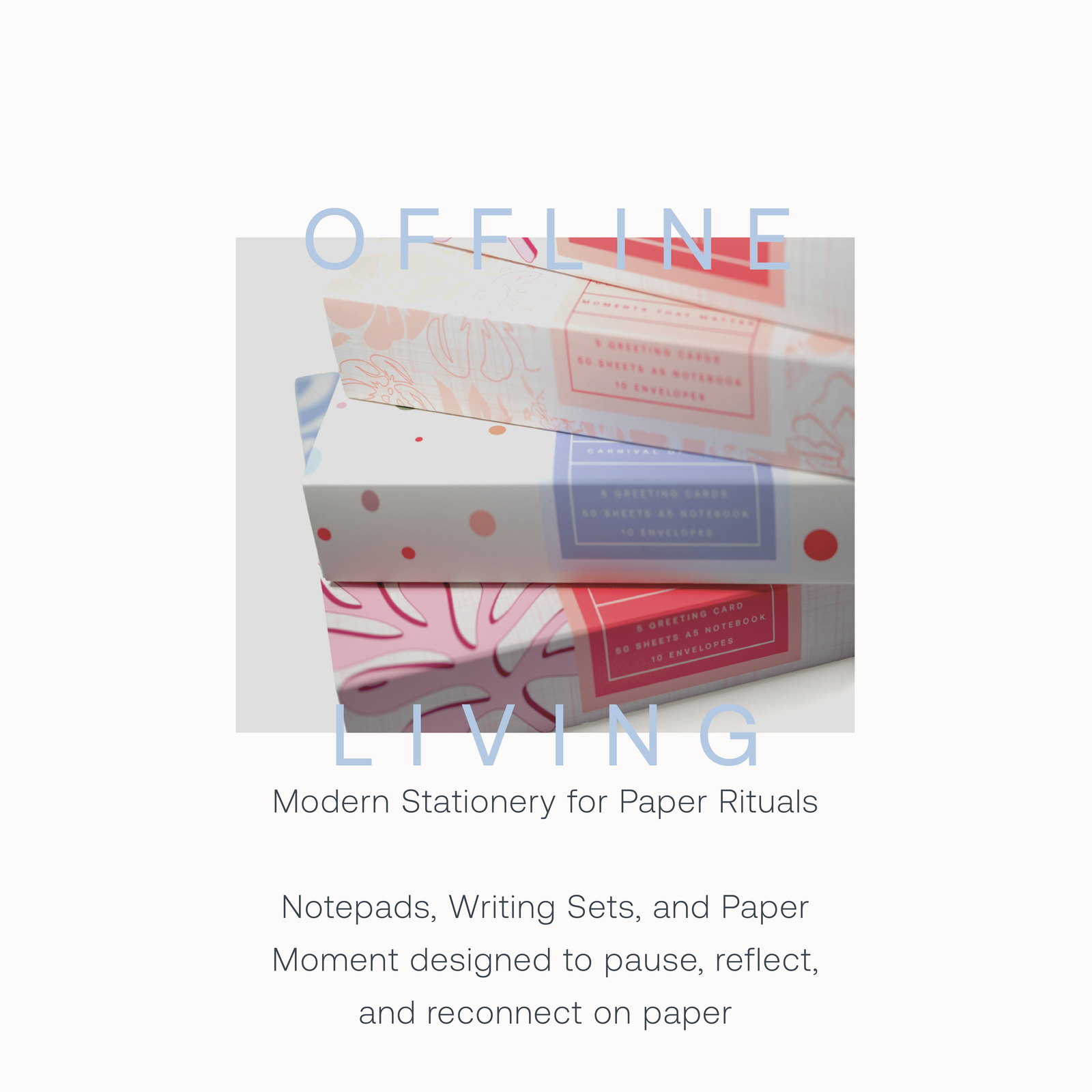
We design paper tools that make those moments easier to notice and return to. Not as decoration, but as everyday companions. A writing set that invites a pause. A card that opens a moment of connection. A notebook that holds a thought so your mind does not have to carry it all day.
Our intention is to make behavior change feel simple, human, and beautiful. Not something you have to force, track, or optimize. Just small physical gestures that quietly reshape how you move through your days.
Over time, these small moments begin to create a calmer rhythm across the year. A steadier relationship with time, attention, and care. A way of living that feels more yours.
The analog bag is simply one doorway into that rhythm. What matters most is not what you carry, but what you choose to notice and keep.
You do not need to change your life or buy a new bag to begin.
Start with one simple object you already own. A notebook. A card. And a pen you enjoy holding.
Place it in your bag tonight.
Tomorrow, when a small pause appears, while waiting for coffee, sitting on a train, or between tasks, reach for that one object instead of your phone. Write a sentence. Make a small note. Or doodle a little. Simply touch the paper and notice what is happening in the moment.
That is enough.
If you would like a little guidance, our Analog Bag Starter Kit offers a simple checklist and a small selection of paper tools designed for everyday offline moments. Nothing complicated. Just an easy way to begin and start noticing the spaces in your day again.
The goal is not consistency or perfection.
It is simply making space for moments that belong to you.
If this way of pausing resonates, you do not need to figure out how to create these moments for yourself.
In our Calmer Year, we bring these small pauses together in a simple, tangible way. The micro-pauses are already there, woven into the experience, so you do not have to think about what to do or when to do it. You simply arrive, open the page, and let the moment meet you.
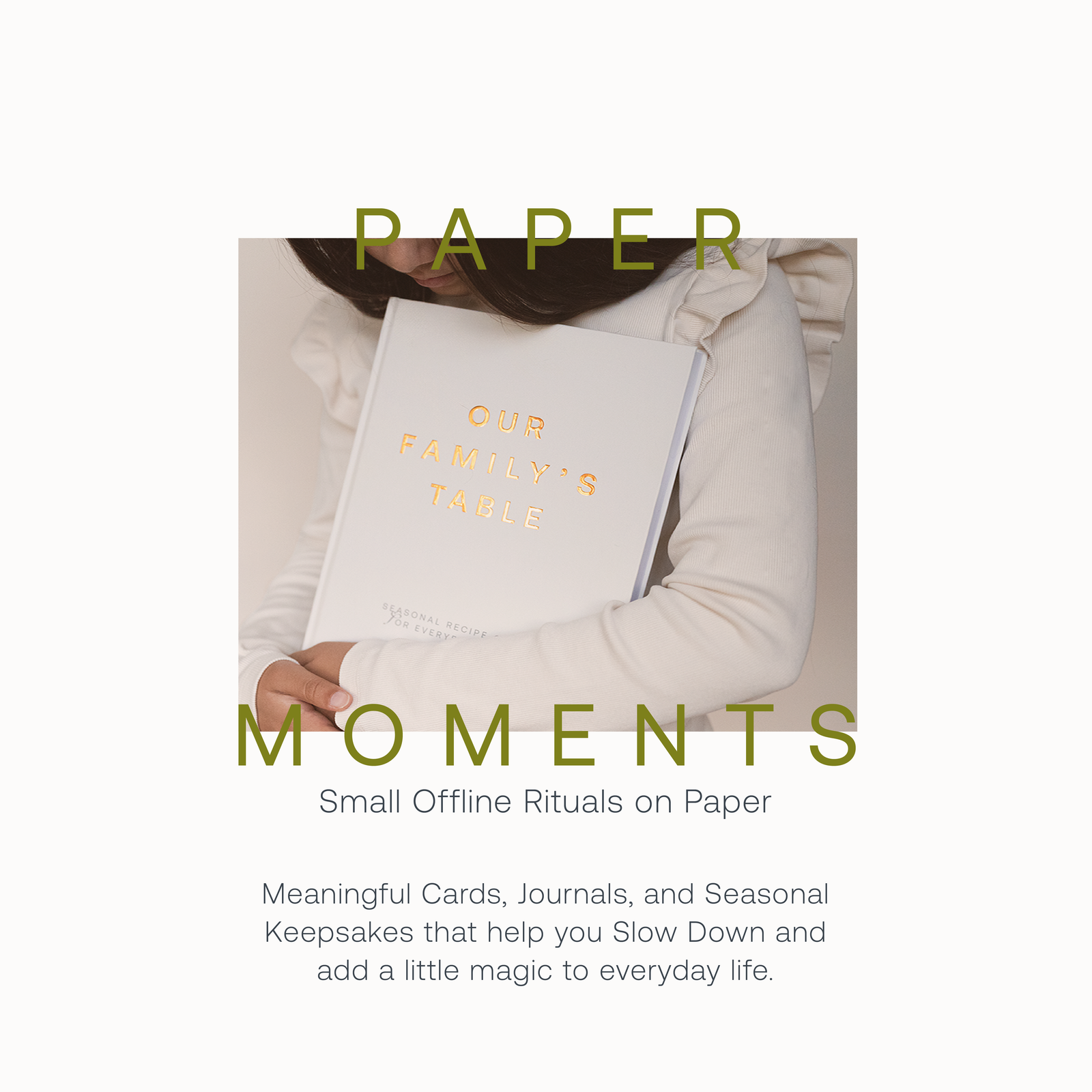
Each Paper Moment is designed as a lived experience. A brief, sensory pause that helps the mind release without turning rest into another task. Writing prompts, space, and seasonal cues are held together in one place, so the pause feels natural rather than effortful.
You can use a Paper Moment when your day feels full, when your thoughts need somewhere to land, or when you want to return to yourself for a moment without stepping away from your life.
If you would like to support this work, you are welcome to explore our collection. If shopping does not feel right right now, sharing this page or passing the idea on is a meaningful way to keep this work moving forward.
At Glimmery Moments, we believe in care, continuity, and creating small, thoughtful experiences that help people feel more at home in their lives, even when life remains busy.
This is usually the first question. People worry about overcomplicating it or choosing the wrong things.
An analog bag works best when it stays simple. Think of it less as a kit and more as a small place to put things down. A container for unfinished thoughts, half formed ideas, small worries, and quiet observations that you do not want to keep carrying in your head.
Many of us move through the day holding a lot internally. Reminders, emotions, loose ends, small mental loops that never quite close. Writing something down, even briefly, gives the mind permission to release it. The bag becomes a gentle form of mental offload. A place where things can rest instead of circling.
Most people begin with three gentle categories.
Something to read.
A book you already enjoy, a magazine, or a few printed pages you keep returning to. Reading a few lines slows the nervous system and gives the mind a softer focus.
Something to write or create.
A notebook, a few cards, or a pen you enjoy holding. This becomes your place to put things down. A sentence you do not want to forget. A thought that keeps looping. A small note to yourself or someone else.
Something to do.
A crossword, a simple sketch, a small handwork project, or anything that can be picked up and put down easily. Small physical activity helps the body discharge restlessness and return to calm.
That is enough to begin. Nothing needs to be perfect or complete. The value lives in the act of returning, not in what you produce.
If choosing still feels heavy, our Analog Bag Starter Kit page shows a simple, low friction way to begin without overthinking.
No. The analog bag is not about buying something new. It is about creating a small, reliable space for a different kind of behavior to happen.
What matters is not the bag itself, but what it allows you to do. To pause instead of react. To place a thought somewhere instead of carrying it. To choose presence in a moment that would otherwise disappear into a screen.
Many people use a pouch inside their daily bag or a small tote that moves between work and weekends. The practical reason is simple. When your offline tools live together, they become easy to reach when a quiet moment appears. The behavior becomes frictionless.
Some people also wonder how this feels in public. Pulling out a notebook or writing a card can feel unfamiliar at first. In reality, it often feels grounding rather than performative. It quietly signals that you are present and allowed to be unavailable for a moment. A small boundary that protects your attention.
Over time, the bag becomes less of an object and more of a cue. A reminder that you have another way to meet the moment.
Habit lives in the hands. When your phone is always in your pocket, your fingers find it before your mind has time to choose.
The analog bag works best when it is placed where your hand naturally lands. On your lap. In the outer pocket of your bag. Inside a pouch that you touch before you touch a screen. Even brushing against the fabric or zipper can interrupt the reflex.
You do not need to use it every time. Simply noticing the choice already softens the habit loop.
Some people like to add one small sensory anchor to the bag. A pen with a comforting weight. The smell of a favorite paper. A smooth stone in the pocket. Over time, this sensory cue helps the body recognize that it is safe to slow down.
Writing on paper allows thoughts to move out of the mind and onto the page. This reduces the mental effort of holding everything internally. The physical act of writing also grounds attention in the body, making the pause feel tangible rather than abstract.
Two minutes is exactly the kind of moment this practice is made for.
Habits do not grow through big, dramatic changes. They grow through small actions that repeat in the same kinds of moments. Waiting. Pausing. Transitioning from one thing to the next. When you gently return to paper again and again in these small gaps, your body starts to recognize the pattern.
You are not trying to write something meaningful or complete. One sentence. One word. One envelope addressed. One small sketch. These tiny gestures still create a sense of closure and calm. They give the nervous system a feeling of finishing rather than endlessly holding things open.
This is often called a paper pause. A short moment of presence that fits naturally into the flow of the day. Over time, these pauses begin to feel familiar. Your hands start reaching for paper without effort. The habit forms quietly.
Small moments repeated gently shape behavior far more than long intentions ever could.
Whether you're looking to prevent burnout, build emotional resilience, or simply create more space for rest in your busy life, the Mood Organizer offers a practical, beautiful tool to support your well-being journey.
Begin this season by planning simple and easy moments that feel like yours and truly supports your body, mind, and heart.

