













You don't always need a reason to reach out.
You bought blank cards. You want to reach out. But you're staring at the empty space wondering: what do I even write? That's the challenge with cards beyond the occasion. There's no template. No “Happy Birthday” to fall back on. Just you, a blank card, and the desire to connect.
We live in a world where messages are quick sometimes even thoughtless. A text sent in seconds, a reaction emoji, a voice note while walking to the car. But writing a card is different. You have to sit down, think about the person, choose your words, and put them on paper.
The receiver notices that. It feels different. And unlike a message that disappears into a thread, cards and letters are something people keep sometimes for years.
Here are 10 prompts to help you fill that blank space with words that matter.
What does “cards beyond the occasion” mean?
Most cards are tied to a moment: a birthday, a wedding, a holiday. The occasion gives you a reason to reach out — and often the words are already there for you.
Cards beyond the occasion are different. There’s no event. No reminder in your calendar. Just the thought: I should reach out to this person.
That’s what makes it more meaningful.
When someone receives a card like that, they know it wasn’t sent out of obligation. It was sent because you thought of them. Because you took a moment. Because they matter not just on their birthday, but on a random Tuesday.
A blank card makes that easy. You decide what to say and when to send it.
Cards beyond the occasion create room for a different kind of connection.
Not because the calendar told you to reach out, but because someone crossed your mind and you chose to act on it.
What to write in a blank card: 10 prompts
If you’re wondering what to write in a blank card, start simple.
These prompts are starting points, not scripts. Use them as they are, or change them so they sound like you. It doesn’t need to be perfect. It just needs to be real.
1. “You’ve been on my mind”
When to use it: When someone keeps coming to mind.
What to write:
“You’ve been on my mind lately. Just wanted to say that.”
Why it works: It’s simple and honest. No explanation needed.
2. “I saw this and thought of you”
When to use it: When something reminds you of them.
What to write:
“I saw something today and it made me think of you.”
Why it works: It shows they’re part of your everyday life.
3. “Are you okay?”
When to use it: When someone has been quiet.
What to write:
“Hey, I haven’t heard from you in a while. Just checking how you’re doing.”
Why it works: It’s direct and caring, without pressure.
4. “I appreciate you”
When to use it: When you don’t say it enough.
What to write:
“I don’t say this enough, but I really appreciate you.”
Why it works: Appreciation doesn’t need a special moment.
5. “I’m proud of you”
When to use it: When someone is going through something or trying.
What to write:
“I know things aren’t easy. I just wanted to say I’m proud of you.”
Why it works: It acknowledges effort, not just results.
6. “This reminded me of when we...”
When to use it: When a memory comes up.
What to write:
“I was thinking about that time we… still makes me smile.”
Why it works: Shared memories create connection.
7. “No reason, just hello”
When to use it: When there’s no reason at all.
What to write:
“No reason for this card. Just saying hello.”
Why it works: It’s simple and unexpected.
8. “I wish we lived closer”
When to use it: For people you don’t see often.
What to write:
“I wish we lived closer, but I’m thinking of you.”
Why it works: It acknowledges distance without making it heavy.
9. “I’m here if you need me”
When to use it: When someone is going through something.
What to write:
“I don’t have the right words, but I’m here if you need me.”
Why it works: It offers support without pressure.
10. “You matter to me”
When to use it: Anytime.
What to write:
“You matter to me. Just wanted you to know.”
Why it works: Clear and direct. Nothing extra needed.
How to make these prompts your own
These are just starting points.
- Add something specific
- Keep it short
- Write how you normally speak
Two sentences is enough.
What if you’re still stuck?
Think about the person for a moment.
What’s the first thing that comes up? A memory, something small, something they did?
Write that down.
That’s your card.
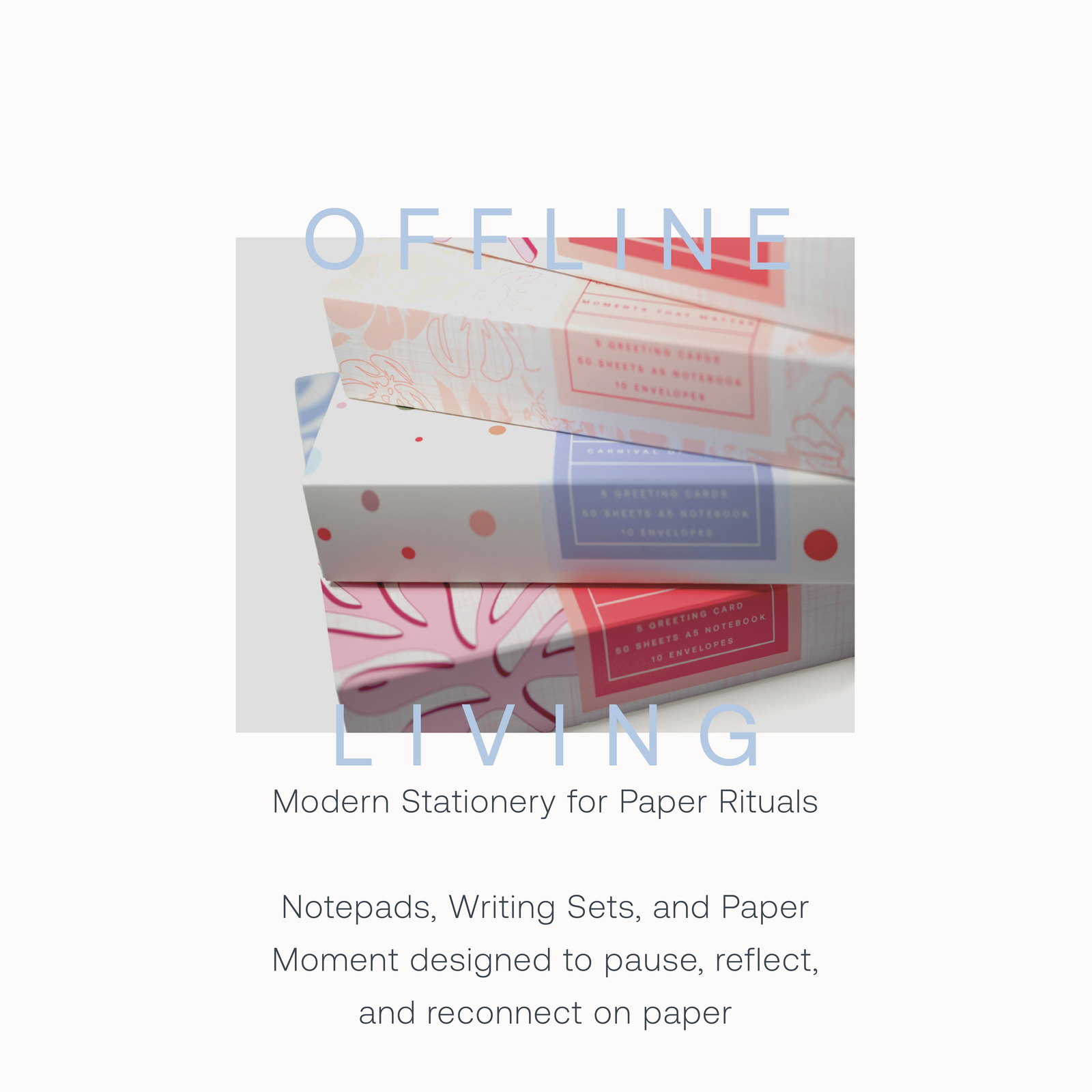
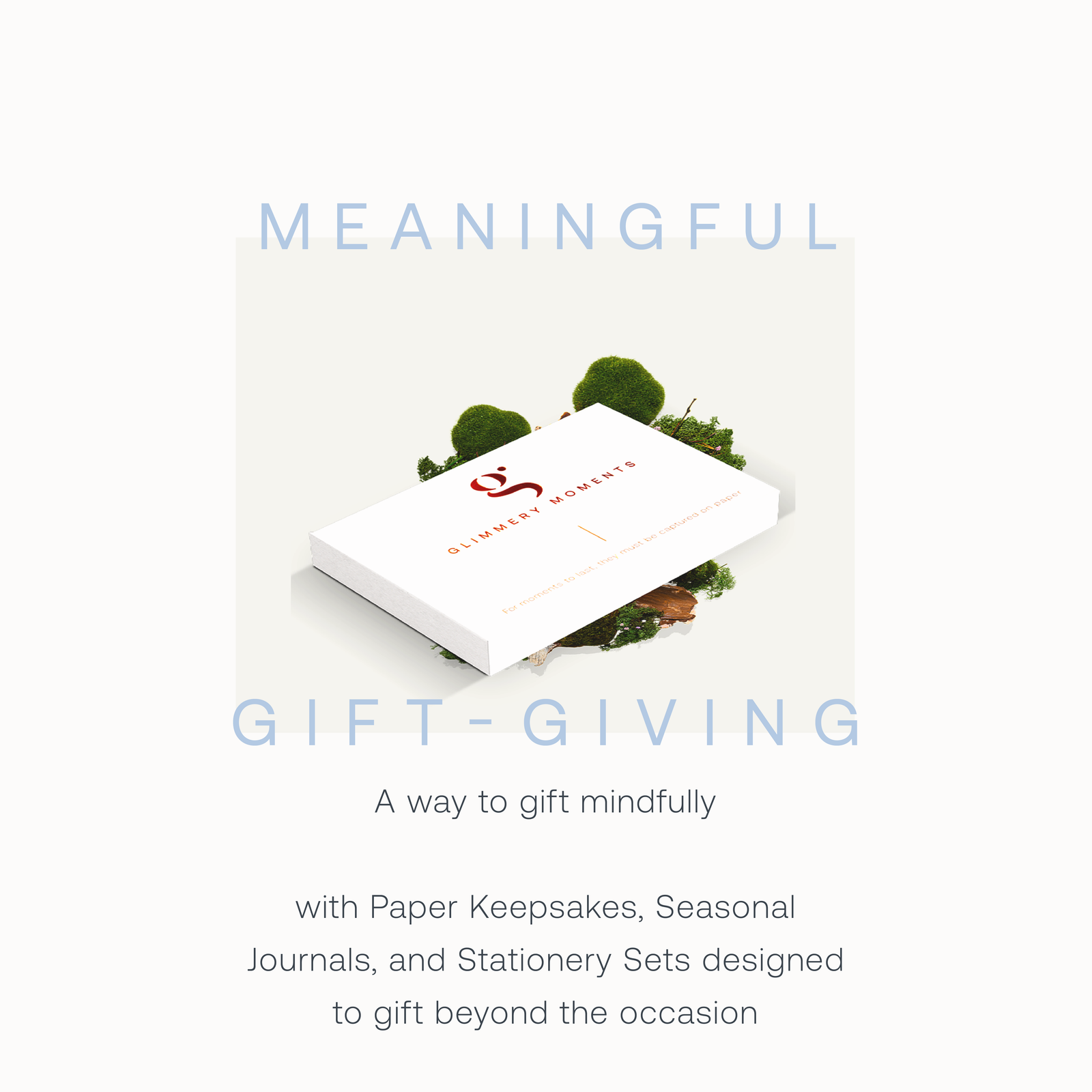
The Snail Mail Bundle: a set of cards beyond the occasion
If you want to make this something you do more often, the Snail Mail Bundle brings everything together in one place.
What’s included:
• Blank card sets for cards that can be sent beyond the occasion
It’s there if you want to keep going.
If not, start with one card and one prompt.
Start with one card beyond the occasion
Think of whom you’d like to send a card to, choose your card, and pick a writing prompt. It doesn’t have to be long, just a few lines. Send it.
That’s really it. No big gesture. Just reaching out.
What should I write in a blank card?
Start simple. Write one honest sentence — thinking of you, checking in, or appreciation. That’s enough.
Can I send a card without an occasion?
Yes. In fact, those cards often mean more because they’re unexpected.
How long should a card message be?
It doesn’t have to be long. One or two sentences is enough.
What makes a handwritten card special?
It takes time and effort. That’s what people notice.
What does “cards beyond the occasion” mean?
It means sending a card without a birthday, holiday, or formal reason. You send it simply because someone is on your mind and you want to reach out.


